Tuesday, July 24, 2012

Men in Skirts


            Monday, July 2, I found myself walking down the large center aisle at Wal-Mart and spied a tall man with mutton chops facial hair wearing a kilt and almost knee-high laced "army" boots.  If he had not been asking an employee a question about where to find something, I would have raised my fist to my shoulder as I walked by and in a deep, guttural voice grunted "Flatfo-o-o-t."  Obviously, this man was a fan of Flatfoot 56 and probably planned to go to the midnight pool-party concert on Friday. 

            Even though I was in my floral print sleeveless shirt, denim shorts, white ankle socks, and white Pro-Walker shoes with three kids in tow, I felt a certain comradery with this man since both of our lives had been touched by some of the same people.  That's a little bit of what it was like at the Cornerstone Festival.  Yes, this is another Cornerstone blog.  I can't help myself.  I still find it amazing how such a diverse group of people could come together and blend so well for one week each year.  I recently read one man's reminiscing thoughts about the festival, and he made the comment, "I surprised myself at how casually the words, 'over there is a man juggling knives,' rolled off my tongue."  When I read it, I thought, "and so?"  Then I remembered that, although this did not seem out of place at Cornerstone, I would have been surprised and maybe a little threatened if I found a man juggling knives in another situation.  However, not at Cornerstone, it fit.  All of this meshing of worlds and thoughts happened without alcohol or drugs to numb the senses or judgment.  I don't clearly understand how the Holy Spirit of God works, but I think the one-mindedness that often occurred at Cornerstone was the work of the Holy Spirit.
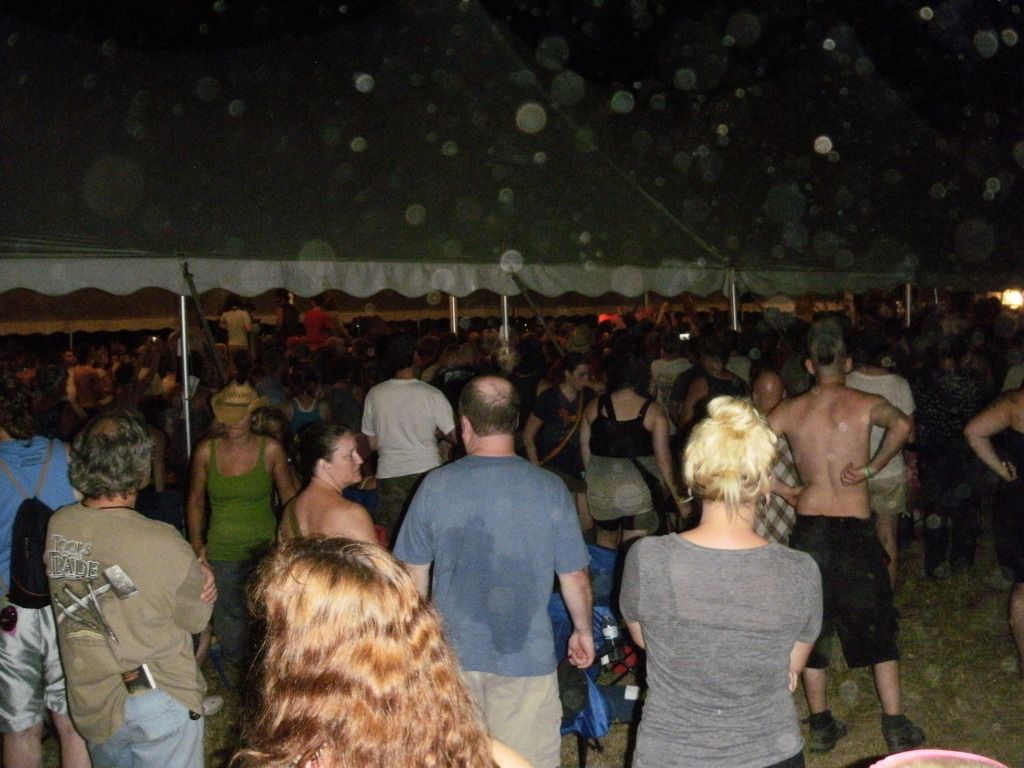
The spots are dust particles flying around, even
though seemed invisible to the naked eye.

            Observing the "one-mindedness" of fans (not necessarily the work of the Holy Spirit) surrounding Flatfoot 56 brought amazement to me once again at their Friday night concert.  In preparation for Cornerstone, the band had announced on its Facebook page that the theme would be a pool party.  I do not visit their Facebook page or search for them on the internet, but by word of mouth, I, too, knew the theme.  It did not surprise me to see some people wearing floaties and carrying various water toys at the concert.  However, I was taken aback by the pied piper effect I witnessed before the concert even began.

            I told my older, still-at-home daughters that they could go with their adult siblings to the concert, and I would meet up with them there.  I planned to take my younger daughters and their friends to other concerts until it was time for Flatfoot.  Not wanting to miss anything at Flatfoot, they decided they wanted to lie down at our tent for an hour, so they could be rested and ready for the midnight concert.  Half expecting them to fall asleep anyway, I agreed.  At 11:40 p.m. I told them it was time to head out.  Surprisingly, they jumped to attention, and we began our half-mile or more walk to the concert.  A few other people were walking on the road in our camping section toward the concert tents.  That was to be expected.  Usually, there was always someone walking down the road.  However, as we got on to the main, dusty gravel road, I began to see droves of people quietly emerging from the blackness on each side of the road, leaving their camping areas, and pouring on to the road.  After we passed the first fork in the road and no one veered to the left, I looked behind me and saw that people continued to flow into this growing procession.  Flashlights and the headlights from a few passing golf carts highlighted the billows of dust floating into the air.  This visual image seemed to pop from a science fiction movie, especially since the occasional blinding light primarily revealed silhouettes, not the actual faces of travelers.

            I told myself I was glad we had not waited until the last minute since, obviously, a lot of people were going to see Flatfoot 56 as well.  I was wrong.  Not about the multitudes.  About getting there early.  As we approached the very large tent, which lay in a slight dip in the pasture beside the road, I could see that the tent already appeared to be full and overflowing.  At least 1000 people patiently chatted and joked while they waited.  Cornerstone has no overall public address system to announce concerts.  No one had gone through the grounds with a blow horn to encourage attendees.  I don't even remember seeing any flyers or posters announcing the concert.  Only two items in print revealed the concert:  the notice on Facebook and the name Flatfoot 56 in small print on one of the small charts in the festival program telling the times and locations of concerts.  That's it.  That was all that was needed.  Word of mouth did the rest.  By the way, amazingly, I did meet up with my daughters, their friends, and a friend of mine and her family (my pastor's family).

            Mind you, if my daughters had found this group on You Tube and said they wanted to go to one of their concerts, I would have told flat out, "Forget it."  Without Cornerstone, I doubt I would have ever come to appreciate this band.  Yet, this band also appreciates what Cornerstone Festival has meant to them.  They left their tour in California and flew at their own expense to get to the festival and played for free.  The festival had lost too much money over the years to pay for bands this final year.  (That's what happens when you run a festival to minister to people rather than to make a profit.)  Even so, Cornerstone touched these band members in way that they willingly made the sacrifice to be there in 2012.  In turn, Flatfoot 56 touched its audience in such a way that a thousand plus people willingly made their way through dust and darkness to be at a midnight concert.
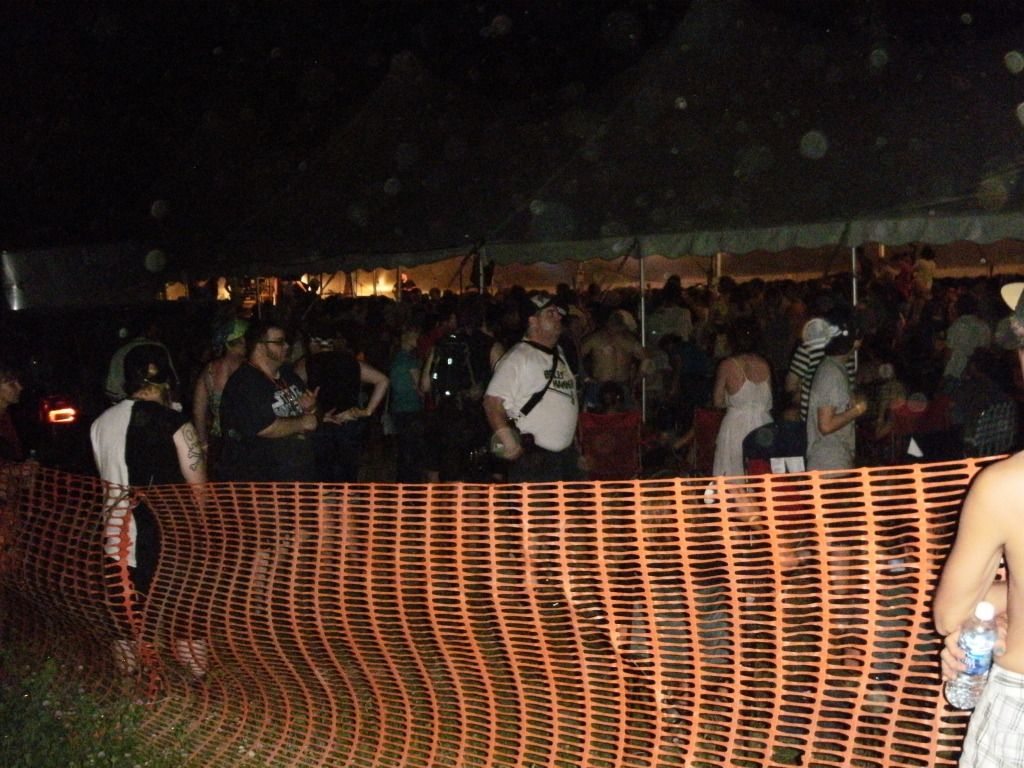

            Some fans go for the music.  Some go for the crazy circle mosh pit.  Others go to be spectators to this seemingly chaotic event.  Yet, everyone is moved.  When Tobin (the lead singer) asked the crowd to listen a few times between songs, everyone became quiet.  Yes, this enormous crowd of strangely dressed, jumping, and sometimes screaming people stopped and listened.  Tobin spoke words of hope and encouragement, but he also admonished and reminded listeners that loving Christ also means obeying Him, spreading the Gospel, and ministering to those in need.  He didn't just tell them what they want to hear, but what they need to hear.

            The ability to mesmerize an audience with words and music did not make these men self-centered super stars.  When not in concerts, they mingled with the crowds on the festival grounds and stood in line at carnival-style food stands for lunch.  Of course, you could talk to them while in line or even ask for an autograph. The members of Flatfoot 56 are not more worthy in God's eyes than the teen who brought his God-seeking friend to the festival.  We all need the salvation of Jesus Christ, and we are all called to use the gifts God has given us to do what he wants us to do.  For some men that means to put on plaid skirts (or kilts J) and play bagpipes or guitars in a hard rock Christian band.  For others it may mean to share the awe and beauty of God's creation with a child sitting in a backyard full of dandelions.  For others it may mean to touch someone's life through a few words on a blog on a semi-irregular basis.  What about you?  Are you using what God has given you to do what He has called you to do?

Friday, July 20, 2012

Reaching for the Unloved, but Touching Everyone


            After 29 years of touching hundreds—no, thousands—of families, it has come to an emotional end.  Yet, many people have never even heard of the Cornerstone Music Festival.  It was not just a music event.  It was not just an outreach.  It was not just a place for deep conversations.  It was a community.  A community of Christian believers that gave attendees a little glimpse of what heaven will be like when people of all nations, tribes, and tongues will bow down and worship the One and Only Triune God.

            Of course, the festival did not have someone from every group of people in the world at the same time, but the variety sure stimulated a vision of what is to come.  Over the years people from every state—yes, every state—and every continent (except Antarctica) has come to Cornerstone.  Two of the many people I found interesting were a Native American 70-something couple.  They had lived all their lives on a reservation in the western U.S., but they had to bring an interpreter with them since their English was inadequate.  Fortunately, their stories and their love for Christ were far from inadequate.

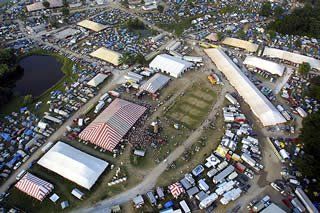
Portion of the Festival grounds 2001 photo by Andrew Winiger, 
posted on Facebook Cornerstone Memories
            I began writing this blog entry many times and got off on various tangents, primarily because Cornerstone has touched my family—and the lives of others—in so many ways.  I couldn't decide whether to try to explain the different components of Cornerstone, to tell you of its origins, to talk about what we did at the festival (including our volunteer work), or to share stories of the 50 to 100 different festival goers who stayed at our house over the years.  Yet, each topic seemed inadequate.  Nothing captured the essence of what made this event truly unique.

            Hearing in May that 2012 would be the last Cornerstone struck my family in the heart.  We were not alone.  In fact two different Facebook pages were started as response by fans:  Occupy Cornerstone and Save Cornerstone Farm.  The festival happened during the week of July 4, before the Wetzel Hall implosion, but I could not really write about it until after I wrote about the implosion.  I guess my emotional response to Cornerstone's ending hampered my ability to speak.  Ironically, sometimes my being emotional makes words flow out of my mouth like a waterfall.

            Cornerstone was often hot and dirty with lots of walking.  There never seemed to be enough shade or breeze. We carried jugs of water with us, which was bulky and awkward, but we always seemed to run out.  When it wasn't hot and dry, it was raining and extremely muddy.  Camping on the festival grounds did not usually work for us.  Not counting the inconveniences that come with camping and sleeping on uneven ground, the nights would be long and loud.  Even so, I camped out with some of my daughters for 3 of the nights this year.  Mind you, this year the day time temperatures ranged from 97 to 103 with no air conditioning available anywhere except for the few people who had reserved camper spaces and had it in their campers.  The night time temperatures were generally warm, too, except one night I think it might have gotten down to the 70's and felt "cool."  Why did I do it?  I don't even like sitting in my own yard if it is not quite the "right" temperature.  Why?  It was Cornerstone.

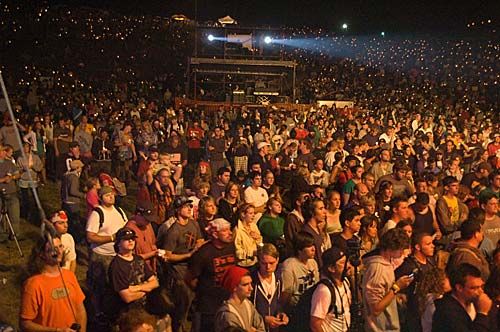
Crowd at Main Stage when attendance was about 25,000;
at the same time, bands were playing in
 tents in other parts of the Festival
(from Facebook Save Cornerstone Farm)
            I would like to say, "You had to be there to understand," but it is more than that.  It had to get under your skin.  Then you would understand.  Interestingly, the only common denominator for many festival attendees was a love of Jesus—or seeking to know him.  That's it.

            At Cornerstone I met "professionals" (including a professor that had to leave the festival one day early one year to be a speaker at a conference at Oxford University in the United Kingdom).   Of course, I also met families that fall into the "middle class" just as my family does.  However, a great number of those at the festival live on the fringe of society.  This last group was the original intended audience 29 years ago.  Often overlooked by mainline denominations, those that felt unloved and unwanted could find hope, direction, and love in the ministries of Jesus People, USA (JPUSA for short).  JPUSA purposely chose bands for the Cornerstone Festival that could deliver the good news of Jesus Christ in a style that spoke to this last group.  It worked.  Fortunately for my ears, JPUSA also included bands with other styles of music.  As a result, Cornerstone grew into something more than an event that targeted a particular listening audience, but one that became corporate worship--many individuals coming together as "one church" and a speaking of many tongues through native languages and varied music styles with one purpose—to praise and worship our Lord.  Truly, Cornerstone has touched my family—and countless others—and will have an influence over the years that I cannot begin to fathom.


If you would like more on the history of the Cornerstone Music Festival, you might want to read this article from Christianity Today.

Tuesday, July 17, 2012

Having Served Its Purpose


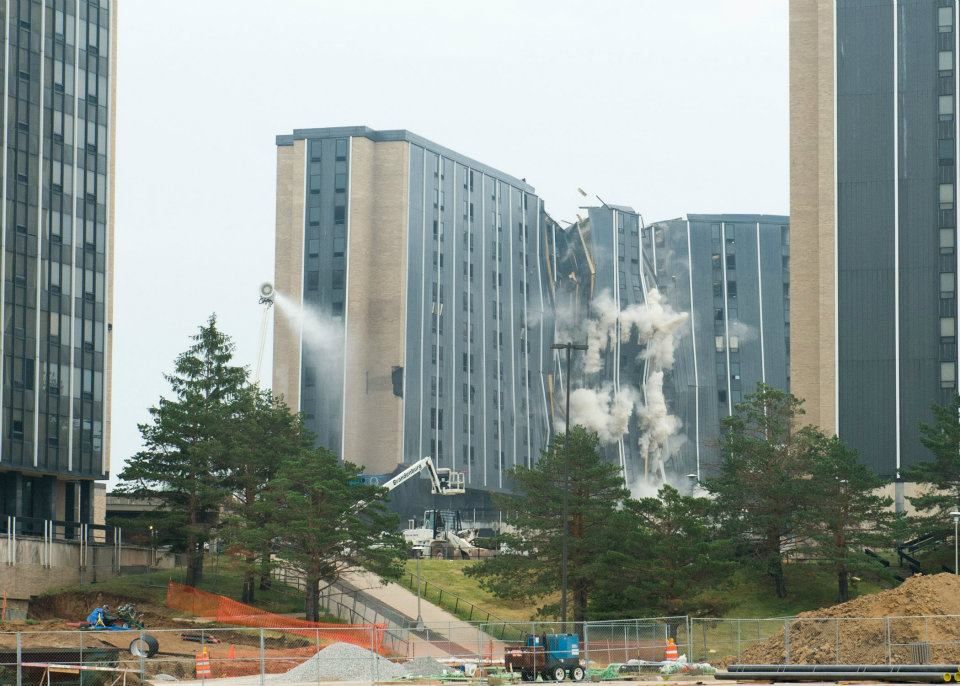
            In less than 10 seconds it was gone.  It took months of full force effort, sometimes 24-hours a day, to build but not to bring it.  What was it?  Wetzel Residential Hall at Western Illinois University.  The impact of the implosion touches families in way that has nothing to do with the explosion itself.

            I attended W. I. U., but I didn't live in any of the resident halls since I got married about the time I started my bachelor's degree, which was when most people my age were graduating with theirs.  However, for about 22 thousand people, the implosion of Wetzel Hall revived memories of their living in that particular hall.  For others, they remembered visiting friends in that building, which is something I did a couple of times.

            Yet, the whole incident triggered discussions and disagreements in the community surrounding the college.  Why are they destroying it?  Isn't that a huge waste of money?  They're what—building a park in its place?  When their enrollment goes back up are they going to ask the state to build them a brand new residence hall—and tax us for it?  Why should they keep it when it is over 40 years old?  How can it possibly be up-to-date with technology and safety needs when it's that old?  Why should the university keep paying for the heating and maintenance for 13-story empty building?  Did it really cost more than $2 million to take it down?  How can they really recycle 95% of what's left of it?

            Regardless whether someone agreed with the decision to take it down or vehemently opposed it, everyone is reminded that nothing in this world stays the same.  King Solomon knew this when he wrote Ecclesiastes 3:1-8:  "There is a time for everything and a season for every activity under the heavens. . ."; nothing lasts forever.  How good it is to be reminded of that fact while we still have a chance to appreciate what we have now.

            Watching the implosion of Wetzel Hall live stimulated our appreciation and awe of the planning, preparation, and precision of safely carrying out this feat.  Yet, at the same time, it touched my family, especially the adults, in a different way as well.  Our time on this earth is so short.  When we are young, we think 30 is old, maybe even "over the hill." The closer you get to being 30, the more you realize that 30 is quite young.  A man down the street just celebrated his 100th birthday, and I wonder when I celebrate my 100th birthday whether I will consider my life to be long or surprisingly short.
            Wetzel Hall's time had come.  It had served its purpose.  When our time has come, will we be able to confidently say we have served our purpose?


If you would like to see the photos or recording of the implosion, you can visit http://www.wiu.edu/student_services/housing/wetzel/, but I believe the footage is better at http://www.facebook.com/wiu.edu?rf=112054308814575.

Monday, July 2, 2012

Non-Health Results of Obama Care


            Controversy has surrounded Obama's healthcare plan from the time it was first proposed.  Although it may be months or even years (especially since certain elements will not even go into force until 2014) before we know completely how this bill will touch families, two results that will greatly impact families have nothing to do with healthcare at all.
            The first is the justification the U.S. Supreme Court used to legalize the government's ability to force its citizens to purchase a particular product or service.  The Court declared that requiring people to purchase insurance was equivalent to the government's constitutional ability to impose taxes.  As a result, the Court has now opened a floodgate that allows Congress (and state legislative bodies) to require U.S. citizens to purchase any good or service. 
            But you say, "This is different.  Everyone needs health insurance."  How can anyone disagree with that?  I was thrilled when one of my daughter's recently obtained a full-time job that included health insurance as a benefit.  Not having insurance can be very costly for a family.  However, most people I know that do not have insurance cannot afford to purchase it on their own.  My mom used to help my dad with both his construction business and farming, but she also had a full-time job at a nearby retail store.  Why the retail job, too?  Because they could not afford to purchase health insurance on their own.  So, during that window of a few years between my dad losing his job with a large construction company, which provided health insurance, (that closed completely down when the owners decided to retire) and my mom landing a job with insurance, my parents would have been considered lawbreakers under this provision of the Obama healthcare law.  Isn't it ironic that in the past a person may have been tempted to break the law if he didn't have the money to purchase an item, but now a person who needs health insurance and can't afford it will break the law without choosing to break the law?
            Even so, I have strayed.  Regardless of the reason for Congress to require a person to purchase something, they can now do it.  They do not need a compelling reason.  A politician can say, "I won't raise taxes" but can still take money from your pocket by making you buy something.  I find this a dangerous development. 
            Another aspect of passing this legislation that I find dangerous is the fact that most people (including minority leader Nancy Pelosi) who voted for this legislation had not read it completely before making it into law.  Shouldn't you read a contract, even the fine print, before signing it?  Shouldn't creating a law for the land require as much diligence?  Unlike some pessimists, I do not believe all politicians are corrupt, power-hungry people.  On the other hand, I do expect them to take their positions of authority seriously and to be prudent and diligent in their trusted duties.  I do not consider following the crowd and peer pressure to vote for a particular law as being responsible.  If this law is that wonderful, then it deserved the full and careful attention of its supporters, even if it meant taking the time to show America its value rather than rushing it through before anyone could truly know what it said.  I trust my representatives to carefully fulfill their responsibilities but blind trust is a dangerous characteristic.
            For example, former Dixon Comptroller Rita Crundwell from Morris, IL, stands accused of embezzling more than $53 million. Even if she is found not guilty, anyone can do a simple internet search for "embezzlement" and find numerous cases of "trusted" people who took advantage of other people.  The problem of blind trust does not plague just the government.  A local business suffered greatly when an employee embezzled a large amount of cash.  Unlike employees, most government representatives take an oath to faithfully uphold their offices and to fulfill the duties of those offices.  I feel as betrayed by a representative passing a law without reading it as I feel about a person embezzling public funds.  Trust is difficult to rebuild. 
            How can I trust politicians who pass into law words they have not read or who criminalize a person's inability to purchase health insurance or who have created themselves yet another way to "tax" their constituents without honestly calling it a tax?  Despite the healthcare results we are about to experience for the better or worse, the trust that has been broken between government representatives and those they represent touches family more deeply than the law itself.


Addendum:
            Curious about the taxing authority found in the Constitution?  With a quick review of the U.S. Constitution, I found the following parts.  I do not promise this is a complete list of tax-related sections, but in case you do not have a copy of the Constitution handy, this might satisfy your curiosity.

             Article I Section 8 states:

            "The Congress shall have power to lay and collect taxes, duties, imposts, and excises, to pay the Debts and provide for the common Defense and general Welfare of the United States; but all duties, imposts, and excises shall be uniform throughout the United States."  (modern spelling and punctuation applied)

            Congress clearly has the right to tax its people, but there is large area of debate as to the limits of that power.  For example, most of the debts of the U.S. at that time were a result of the revolutionary war.  Did the founders believe the only justified debt was to defend (or establish) our country?  What constitutes "general welfare?"  Regardless of the founding fathers' ideas about justifiable taxation, they basically did not legally limit the extent of taxation.  We should take this as a warning to beware of all legislation that is not specific and/or narrow.  Despite the original intent, consequences years later may have nothing to do with the original intent.

            That same section allows Congress "to raise and support Armies," which would require taxing citizens to support the armies.  Yet, this provision does contain a limitation:  "no appropriation of money to that use shall be for a longer term than two years."  In other words, Congress is forced to re-evaluate money spent on "Armies" every two years.  I take that back.  They don't have to "re-evaluate" the situation every two years; they just have to vote every two years to keep spending the money.

            Section 9 of Article I limits the amount of tax states could impose on importing people to its state, but since that section alludes to forced slavery, we no longer have to consider this portion.  Thankfully.

            Section 9 also clarifies that "uniform" taxation should be based on population.  In addition, it prohibits the taxing of products moved from one state to another and the imposing of water port fees at different rates for ships from different states.

            Article VI states that all debts legally acquired by the U.S. under the Articles of Confederation would still be honored under the new Constitution.  (Remember that an earlier article allowed Congress to pay debts through taxation.)

            Amendment 16 gave Congress the power to lay and collect taxes on incomes from any source and these taxes did not have to consider the amount of money collected from each state in comparison to the population of that state.  Some people say income taxes are illegal under the Constitution, but to me it looks like this amendment is the legalization of the income tax.

            Amendment 24 makes it clear that no one can be denied the right to vote based on that person's failure to pay a tax.  Hmm, I wonder if this applies to our newly declared "tax" of purchasing health insurance.  Wait a minute.  A felon can be denied the right to vote.  So, as long as the failure to purchase health insurance does not become a felony, then a person not paying that tax can still vote.

            If you have not read the U.S. Constitution and its Amendments recently, I would encourage you to do so.  It comes back to blind trust.  Are you just "trusting" government officials to uphold the law of the land or are you making sure they do?

Tuesday, June 26, 2012

Homeschool Myths

      While waiting for my next original entry (sorry, I have misplaced the article I am going to discuss), you might want to pop over to this blog to read Common Homeschool Myths Dispelled.  I have not read any other entries in this blog, but the I-can't-homeschool reasons listed are comments I have heard many times.  If you have made these same comments, you might find the answer for which you are searching.
      You might say, "This doesn't touch my family, because I have no desire to homeschool."  However, I would encourage you to read it anyway, so you can have a better or more complete snapshot of the possibility of homeschooling.  Besides, if you have felt awkward saying ones of these comments to a homeschooling mom, you can now have the "answer" without asking!
      I would love to hear if one of the myths or if one of the "answers" touches your family.

Saturday, June 23, 2012

I am not having much luck lately working on Touching Families.  Before my computer problems, I began to get a "cold."  I am just now starting to shake it.  It clogged all of my sinuses and moved into my chest.  By the time I fulfilled all my regular responsibilities, I was too wiped out to write.  The first part of 4-H contests are Monday, so that has everyone in the house buzzing.  Even so, look for a new entry soon.

This entry was posted on my facebook page for Touching Families.  When I have miscellaneous comments or updates such as this, you can check http://www.facebook.com/TouchingFamilies.

Tuesday, June 12, 2012

Touched by Technology


            Every family is touched by technology.  For some families, technology dominates the home to the point mom calls everyone to dinner with a text.  My family is far from that, but I (and this blog) have recently been given a kick in the gut by my laptop.  Compound that with my being home only one day out of the last 10 days, and I feel both lost and frustrated.  Thankfully, God has revealed an object lesson to me through all of this.
            Over the last few months I have realized that problems with my laptop's DVD player are not just flukes with particular CDs or my complete incompetence.  My first conclusion was that the hardware itself needed to be replaced.  I did not think we could afford to repair that at this time.
            Since we have to spend our money carefully, I try to take good care of my laptop, even though I take it many places with me.  My laptop case is rather big and bulky.  I like to have with me everything I might need for it, and I believe it provides extra protection for my laptop.  Despite these precautions, I know that sometimes equipment just quits working. 
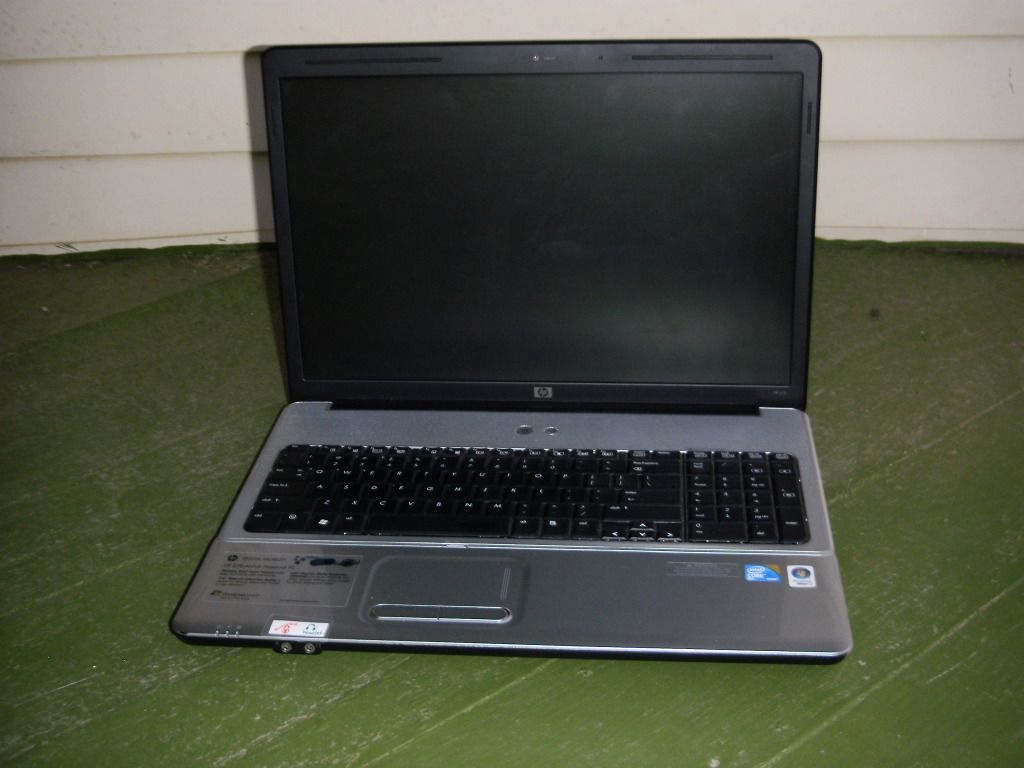
The guilty party
            Accordingly a week ago when I was in a large town, I went to the local Best Buy to get a very rough estimate on replacing my DVD burner.  To my amazement, I learned that my problem sounded like a software filter problem that sometimes occurs if more than one program uses the DVD burner and could be fixed in as little as 30 seconds.  Woo hoo!  But that wasn't my problem.  It was a software problem.  Just not a 30-second problem.
            Apparently my laptop had gotten a virus at some point.  Fortunately, my anti-virus software evidently successfully removed the virus, but in the process it also removed codes from my Windows 7 operating system.  Those "holes" made my computer incapable of locating and/or using my CD/DVD equipment and probably caused other problems that I did not yet realize existed.  The technician said that fixing the problem would endanger all my files, and he recommended the price package that would include his backing up my files and restoring them, which would mean an additional $100 on top of the repair itself. 
            Being the cautious person I try to be, I had backed up my laptop at 5:30 that morning before leaving town.  At home I have an external hard drive just for my laptop.  That morning I watched little numbers race across the screen until the symbol turned green and declared, "Backup Complete."  The program is able to detect all the changes since my last backup and save the changes accordingly.  Then when I need to restore, I just hit the restore button.  Well, it's supposed to be that easy.  So, when the technician gave me a choice, I told him I couldn't do the repair if I had to pay the extra $100, so it was a good thing I had done my own backup.  I only needed to put a couple of things on my thumb drive, which were files I had created after the backup, before I handed it over.  I was disappointed at not having my computer the rest of the day, but it was going to be worth it.  J
            The next day I picked up my laptop, they showed me that the DVD player was working, and they loaded Adobe's free Acrobat Reader, which I was going to need the rest of the day.  However, the rest of my programs were at home, and I would not be anywhere with internet access until I got home.  I was soon glad to get home and get my laptop going before I would be on the road again that night. 
            I began loading programs…well, attempted to load programs.  Apparently since my previous Windows 7 was an upgrade from Vista, it wasn't quite full functioning.  Now it has a full Windows 7 program without pieces of Vista interfering.  As a result, at least two programs got notices of being incompatible.  One would not fully load; the other seemed to load anyway, but I can't try it because I could find upgrade #3 and not #2.  Without #2 I can't fully try it.  I still have to contact customer support.  Of course, I have to redo all my settings for the programs that did load.  I still have at least 3 more programs to put back on my laptop.  
            Then came the moment of truth:  getting all my files back on the computer.  I attached the external hard drive, let the program automatically load, and waited for the restore menu to pop up.  It didn't.  All the other parts were still in the menu, just not restore.  I manually looked in the hard drive.  I could find some files I had manually backed up, but that was all.  The newest "My Documents" folder I could find was July 2011.  Fortunately, the majority of work I had done on my laptop the past few months dealt with Classical Conversations, and I had copied those files to my desktop computer two weeks ago.  I will have to redo some documents—the ones I know I'm missing, but it could be worse.  I am home again and still feel like I'm stuttering with everything I'm trying to do.
            This is going to be a headache one way or another for days (or weeks) to come—just like being part of a family.  In fact, many parts of my computer situation are similar to life with a family.  I thought I had done all the right things to protect my computer and its contents.  I had a sturdy carrying case and had a highly recommended anti-virus software in place. 
            We try to protect our families, too.  We give our children boundaries—sometimes even physical fences—and warn them of potential dangers.  It may look like we are doing everything right, but somehow a bad influence, attitude, or habit stealthily invades and touches our family, just like the computer virus secretly invaded my laptop.  You may not notice the intrusion at first.  Some little things may not make sense, but you brush it off completely or consider an inappropriate comment or a misspoken truth as a fluke, just like I blamed a "scratched or locked" CD as my DVD problem.
            I finally had to face the fact that I truly had a problem with my laptop.  I did not like the big problem it appeared to be.  Eventually, we have to face the fact that a real problem has invaded our family or the lives of our children.  The problem may look too big to handle.  When we seek help, the initial guidance we get may be promising and lead us to believe it's a quick fix, just like I thought I had a 30-second fix to my DVD issue.  The transition through repairing damage done to a family member (or the family as a whole) to a new and a better level of a relationship can be difficult, time consuming, and full of anxiety.  The days I waited for my computer and went without access to any type of functions or information I got with my laptop was mildly difficult and left me a little anxious. 
            That was nothing compared to the healing that needs to happen in a family, but just like I thought everything could quickly go back to normal after I got my laptop home, a family can also wrongly think everything will quickly go back to normal after a big problem has been "corrected."  Rarely does everything go back to the seemingly carefree days before the problem occurred. I have to be patient while I continue to go through the adjustment of trying to get my files and programs the way I want them, but I also have to realize it's not going to be exactly the same as it was before.  In our families, we need to be patient, too, and remember that even though it is not the way it was before, it does not have to be.  We can move on to some new "good."
            Technology never stands still but keeps moving to the next "better" level.  Families can, too.  Families were here before technology, and families will exist even if the world's power grids permanently fail.  Each of us may be touched by technology, but it can never outdo the power of families.