
Sunday, October 14, 2012

Day 14—Freedom on the Sabbath (or Is the Sabbath Worth Discussing? Part II)


                        Genesis 2:2-3  "By the seventh day God had finished the work he had been doing; so on the seventh day he rested from all his work.  And God blessed the seventh day and made it holy, because on it he rested from all the work he had done."

            A week ago on Day 7, the topic centered on how the Sabbath can touch your family.  Although many people, even Christians, think the "Sabbath" is mentioned only during the account of Creation and a description of the Ten Commandments, it is actually emphasized repeatedly throughout the Old Testament.  It is no wonder the Pharisees created more and more strict rules to demand obedience on the Sabbath. 

            However, the excessive regulations changed the perception of the Sabbath by the common Jew from being a gift of rest and time for prayer and meditation to being a suffocating choke collar. Causing protest from the Pharisees, Jesus corrected the error.  Look at the following passages for examples of how Jesus freed people from the burden of man's laws relating to the Sabbath and showed them the true meaning of this special day.

            Mark 2:23-28—"One Sabbath Jesus was going through the grainfields, and as his disciples walked along, they began to pick some walked along, they began to pick some heads of grain.  The Pharisees said to him, 'Look, why are they doing what is unlawful on the Sabbath?'
            "He answered, 'Have you never read what David did when he and his companions were hungry and in need?  In the days of Abiathar the high priest, he entered the house of God and ate the consecrated bread, which is lawful only for priests to eat.  And he also gave some to his companions.  
            "The he said to them, 'The Sabbath was made for man, not man for the Sabbath.  So the Son of Man is Lord even of the Sabbath.'"

            Note:  these men were not harvesting the field.  They were simply gathering enough grain as they walked by to satisfy their hunger.  Man's law regarding the Sabbath was forbidding this, but God's gift of the Sabbath allows it.

            Luke 14:1-6--"One Sabbath, when Jesus went to eat in the house of a prominent Pharisee, he was being carefully watched.  There in front of him was a man suffering from dropsy.  Jesus asked the Pharisees and experts in the law, 'Is it lawful to heal on the Sabbath or not?'  But they remained silent.  So taking hold of the man, he healed him and sent him away.
            "Then he asked them, 'If one of you has a son or an ox that falls into a well on the Sabbath day, will you not immediately pull him out?'  And they had nothing to say."

           
            The Pharisees did not answer the first question because healing the man violated their rules, yet how could they argue against healing the man with so many people watching?  Again the Pharisees did not answer the next question because they would have rescued the ox from the pit, yet how could they admit to doing any type of work on the Sabbath when that was one of their complaints against Jesus?  Jesus did not worry about giving answers that pleased men; instead He wanted to re-establish a proper respect for God's law, including the Sabbath.
            So, are all the restrictions regarding the Sabbath out the window?

            Matthew 5:17—"Do not think that I have come to abolish the Law or the Prophets; I have not come to abolish them but to fulfill them."

            I think this passage answers my question with a "No."

            Your turn:  How important is the Sabbath to you?  Have you thought about it more since last week?  You can't really teach your children about the Sabbath if you do not know your perspective on it.  As a reminder, do not trivialize the Sabbath.  It is important to God's plan both literally and figuratively. Also, do not emphasize it to the point you become legalistic.  God was not happy with the Pharisees' adding abundant restrictions to His simple command; therefore, he will probably not be happy if you do the same thing.  Even so, your family will be touched in a positive way if you take the time to honor the Sabbath.


            If you would like more ideas on helping your children (and yourself) develop a Biblical worldview or to find out how to win a Wal-Mart gift card, go to the 31 Days Giveaway (Intro. Part II) post for more Touching Families blog links.  If you want to check out other 31 Days' topics, see The Nester.


*All verses quoted are from the New International Version:  THE HOLY BIBLE, NEW INTERNATIONAL VERSION®, NIV® Copyright © 1973, 1978, 1984, 2011 by Biblica, Inc.™ Used by permission. All rights reserved worldwide

Saturday, October 13, 2012

Day 13—Stewards Only, Not Owners, part I

Too bad God didn't give
our bodies wings.

            The world says, "Your body is your body.  It's nobody's business what you do with it or what you put in it."  These ideas will touch your family through both television ads and shows, kids on the playground, and even conversations between adults your children overhear.

            What does the Bible say?

            I Corinthians 6:19, 20—"Do you not know that your body is temple of the Holy Spirit, who is in you, whom you have received from God?  You are not your own; you were bought at a price.  Therefore honor God with your body."

            Romans 12:1-2—"Therefore, I urge you, brothers, in view of God's mercy to offer your bodies as living sacrifices, holy and pleasing to God—this is your spiritual act of worship."

            Nothing is truly our own.  Everything is borrowed—even time, in a way.  This includes our bodies.  Despite people's often careless attitude about caring for our gifts from heaven, God has given mankind direct stewardship over one of His greatest creations:  the human body.  We can express our appreciation by wisely caring for it.  This is especially true for the Christian.

            Your Turn:  What can you do to teach your children this?  Fit it into regular routines and conversation, such as:

            "It's good we have so many good tasting fruits and vegetables.  They are just what our bodies need to be healthy and grow.  Taking good care of our bodies is one way to thank God for giving them to us."

            "Sweet snacks are fine to eat sometimes, but eating a lot of them is not good for our bodies.  If you are still hungry, let's get something that will be just your body needs.  There are plenty of foods that are good for us and fun to eat.  Let's find some."

            With pre-teens and teenagers, conversations about the using—or not using—stimulants (such as nicotine), alcohol, or recreational drugs should definitely include honoring God by respecting the bodies He has given us and how the use of those items would not be good stewardship.  Even though you probably realize that you can never keep this train of thought (I can do whatever I want with my body.) from touching your family at all, you may not realize just how difficult it will be to have your children embrace the truth in the verses above.  Why?  Because as adults, we still try to ignore the fact that we are only stewards of our bodies, not the owners.


            If you would like more ideas on helping your children (and yourself) develop a Biblical worldview or to find out how to win a Wal-Mart gift card, go to the 31 Days Giveaway (Intro. Part II) post for more Touching Families blog links.  If you want to check out other 31 Days' topics, see The Nester.


*All verses quoted are from the New International Version:  THE HOLY BIBLE, NEW INTERNATIONAL VERSION®, NIV® Copyright © 1973, 1978, 1984, 2011 by Biblica, Inc.™ Used by permission. All rights reserved worldwide.

Friday, October 12, 2012

Day 12--Love the Law


            Psalm 119:9-16—

            "How can a young man keep his way pure?  By living according to your word. 
            I seek you with all my heart; do not let me stray from your commands.
            I have hidden your word in my heart that I might not sin against you.
            Praise be to you, O Lord; teach me your decrees.

            With my lips I recount all the laws that come from your mouth.
            I rejoice in the following your statutes as one rejoices in great riches.
            I meditate on your precepts and consider your ways.
            I delight in your decrees; I will not neglect your word."


Rejoicing in God's statutes
            Your turn:  Teach your children to love the Lord's laws.  Then they will be blessed and have a reason to rejoice.  Teach them to memorize and recite God's statutes.  And finally, teach them to meditate on His commands.

            If they do these things, they will not neglect His word.  They (nor you) can have a daily Biblical worldview that is not easily swayed by false teaching unless you appreciate, spend time in, and memorize Scripture.


            If you would like more ideas on helping your children (and yourself) develop a Biblical worldview or to find out how to win a Wal-Mart gift card, go to the 31 Days Giveaway (Intro. Part II) post for more Touching Families blog links.  If you want to check out other 31 Days' topics, see The Nester.


*All verses quoted are from the New International Version:  THE HOLY BIBLE, NEW INTERNATIONAL VERSION®, NIV® Copyright © 1973, 1978, 1984, 2011 by Biblica, Inc.™ Used by permission. All rights reserved worldwide.

Day 11—Not Exercising Our Freedoms in the Name of Love


Where will your freedoms
lead others?
            As kids, we cannot wait until we get to things "our" way.  Your family may have been touched by an attitude of rebellion, but that is not what I am talking about.  I am talking about making choices that are not wrong.  I remember hearing one newlywed remark that she loved having her own kitchen where she could arrange it the way she likes it without having to argue with her mom about it.  Neither woman's method of organization was "wrong," but neither method satisfied the desires of both women.

            The world says we have the right to live our lives the way we want as long as we are not hurting anyone else.  Many will add the stipulation that your choices cannot be "bad" or "wrong" choices.  How can any American disagree with that reasoning?

            What does the Bible say?

            I Corinthians 8:9-13—"Be careful, however, that the exercise of your freedom does not become a stumbling block to the weak.  For if anyone with a weak conscience sees you who have this knowledge eating in an idol's temple, won't he be emboldened to eat what has been sacrificed to idols?  So this weak brother, for whom Christ died, is destroyed by your knowledge.  When you sin against your brothers in this way and wound their weak conscience, you sin against Christ.  Therefore, if what I eat causes my brother to fall into sin, I will never eat meat again, so that I will not cause him to fall."

            This passage does not make much sense unless you understand the conversation before these verses.  Basically, Paul is discussing a situation where some people were eating foods "sacrificed" to idols.  The strong Christians did not see anything "holy" or "sacred" with such food because they know the idols were powerless pieces of stone or wood.  They worshiped the only true "God, the Father, from who all things came" (v. 6) and knew He had nothing to do with these idols.  The food was simply food.

            However, the weaker Christians—possibly new converts from a group that formerly saw the idols as gods—felt like they would be sinning if they ate that food.  Of course, I could not find the verse I was looking for today, but somewhere in Scripture is says that, if you do something you believe is a sin (even if it would not otherwise be called a sin), then you have sinned.  In other words, if you do not know if God considers a certain behavior sinful, but you feel like it is and do it anyway; then you have sinned. 

            Now back to the passage above.  Paul knew he had the freedom (the right) to eat certain foods available to him without displeasing God.  Yet, he also knew that certain Christians in that area believed that eating that food would be the same as participating in idol worship.  For them, it would be a sin to eat it.  If Paul ate it in their presence, they may feel like they should copy him even if they felt they were sinning while doing it.  Therefore, Paul abstained from exercising his freedom to eat that food.  Unbelievably, he was even willing to never eat certain foods again if it would strengthen his weak brothers.  Why?  He knew it is better to go without something you may be entitled to than to lead someone else astray.  In other words, just because you are entitled to something does not mean you should exercise your right to take it or use it, especially if it may mislead others.  Let me share an example from my life.

            When my husband and I were first married, we wanted to go out and "do something"—like listen to music and maybe dance.  You may be opposed to dancing, but I do not feel any dancing I did in public crossed the line of being unacceptable.  Unfortunately, about the only places you can go for music are bars.  My husband and I do not drink, so we ordered a soft drink.  However, people walking by our table could not tell that our drinks were not spiked.  Living in a small community (even though we were in the next town), we knew many people there.  On one hand, it was a little amusing to see the shocked looks when people we knew saw us there.  Unexpectedly, the looks and conversation by those who stopped at a table seemed to shift.  Our presence seemed to put a stamp of "approval" on their night life.  Since I knew some of those people, I knew that a life of going to the bars had damaged their relationships and had led to even worse choices.  Although our behavior was not "sinful," we felt we were misleading others.  We never went back.

            Your Turn:  As you read my example, you may think we overreacted.  On the other hand, you may be condemning us for dancing, for listening to rock music, or for walking into the bar in the first place.  Guess what?  You do not have to draw any conclusions about what I did.  The question is:  what are you doing?  What "innocent" activities are you doing that could mislead others?  How are you explaining your behaviors to your children? 

            Perhaps your older children will have situations in their lives where this could be an issue but probably not younger children.  At this point, an evaluation of how you exercise your freedoms should be first on your agenda.  Then look at them from your children's point of view.  What do your children think they see?  Not what you are doing, but what do they think you are doing?  Are you giving them permission to sinful behavior by your non-sinful behavior? 

            This is a tough call.  I would not be surprised if, at this moment, you cannot think of anything you need to change or explain.  Stay an alert anyway.  Something may sneak up on you.  You may not know of any freedom that is causing a problem until you listen to comments someone else says.

            At one point, I was shocked and disappointed to learn someone I knew had made a sinful choice and who then used me as a reference point for what he/she did.  I did not make me feel any better to know that I had done nothing wrong.  Unfortunately, not knowing all the details, this other person perceived I was doing something else. 

            I do not know about you, but I definitely do not want my life to touch others or their families in this way.  Sure I want to have things "my way."  That tendency does not automatically go away when we stop being children.  Fortunately, as adults, we can make positive choices to not always exercise our freedoms and to make those choices in the name of love for those around us.


            If you would like more ideas on helping your children (and yourself) develop a Biblical worldview or to find out how to win a Wal-Mart gift card, go to the 31 Days Giveaway (Intro. Part II) post for more Touching Families blog links.  If you want to check out other 31 Days' topics, see The Nester.


*All verses quoted are from the New International Version:  THE HOLY BIBLE, NEW INTERNATIONAL VERSION®, NIV® Copyright © 1973, 1978, 1984, 2011 by Biblica, Inc.™ Used by permission. All rights reserved worldwide.

Wednesday, October 10, 2012

Day 10--Is it one of your top 5 priorities?

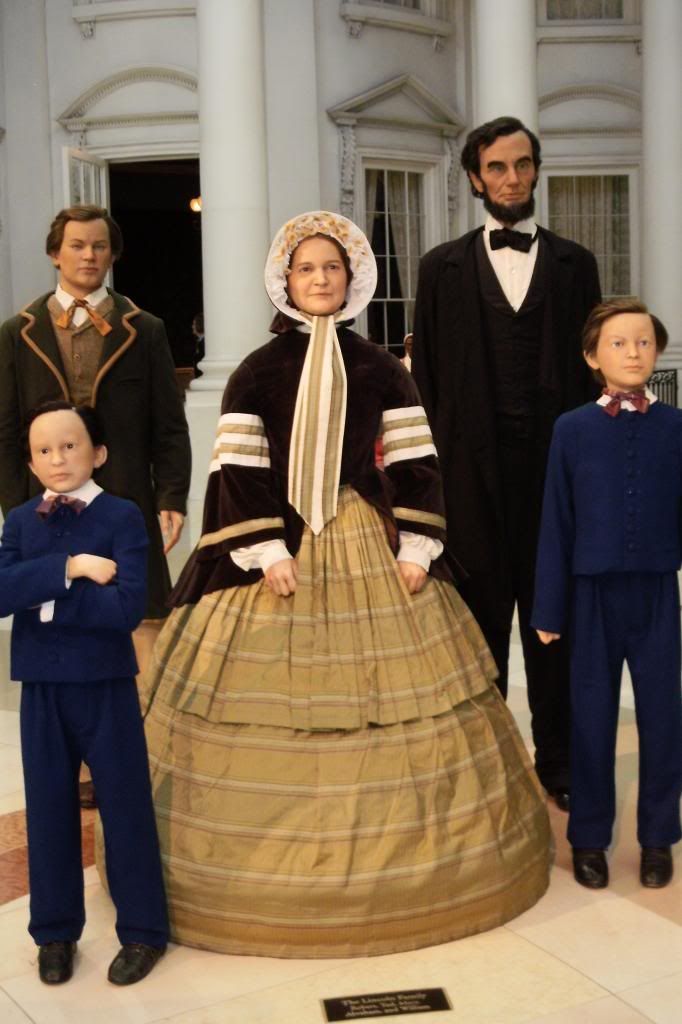
Often considered a wise president:
do you agree?
                     The idea of being "smarter" or wiser touches every member of your family, even preschoolers.  The world says wisdom comes from knowledge.  With enough education, you will be wise and will make right decisions.  Another key to the world's wisdom is to be open-minded.

            I do not know about you, but I have known some very "smart" people—remembering vast amounts of facts and quickly assembling those facts to "solve" problems—that are not very wise.  They make personal choices that lead to disaster.  I mean, look at Lex Luthor!  Of course, I know he is a fictional character, but he symbolizes something very true:  the possession of knowledge does not guarantee a righteous, unselfish, or god-honoring life.

            Any more the idea of being open-minded is almost a laughable joke.  Often people who brag about being open-minded basically mean that they are unwilling to thoughtfully evaluate a wide variety of topics, and they limit their criticism to a few topics and/or people. This may sound a little confusing, but I ask you to open your mind to what I am saying and be willing to understand.  J  Another question I have is, if you are willing to "accept all possibilities," how can you ever come to a conclusion, know right from wrong, or make truly rewarding choices?

            What does the Bible say?

            Psalm 111:10—"The fear of the Lord is the beginning of wisdom; all who follow his precepts have good understanding.  To him belongs eternal praise."

            Proverbs 1:7—"The fear of the Lord is the beginning of knowledge, but fools despise wisdom and discipline."

            Proverbs 9:10, 12—"The fear of the Lord is the beginning of wisdom, and knowledge of the Holy One is understanding … If you are wise, your wisdom will reward you; if you are a mocker, you alone will suffer."
           
            Deuteronomy 4:6—"Observe them (the decrees and laws handed down through Moses) carefully, for this will show your wisdom and understanding to the nations, who will hear about all these decrees and say, 'Surely this great nation is a wise and understanding people.'"

            Proverbs 16:16—"How much better to get wisdom than gold, to choose understanding rather than silver."

            Ecclesiastes 7:5—"It is better to heed a wise man's rebuke than to listen to the songs of fools."

            I Corinthians 2:13—"This is what we speak, not in words taught us by human wisdom but in words taught by the Spirit, expressing spiritual truths in spiritual words."

            James 3:17—"But the wisdom that comes from heaven is first of all pure; then peace-loving, considerate, submissive, full of mercy and good fruit, impartial and sincere."

            Do you see a pattern hear?  True wisdom—everlasting, life-giving wisdom—comes from God.  When you seek and gain wisdom from God, those around you will notice.  They and you both will benefit.  Yet, gaining that wisdom is also tied to obedience to God's Word.  You could consider wisdom a reward for obeying, yet perhaps a better viewpoint is that obedience to God's Word itself teaches you wisdom and makes it a part of who you are.

            Your turn—Now, how do you take this to your kids?  Make it a part of conversations.  Remind your children that as they study their homework that knowing math (or writing skills, etc.) are important, but knowing and obeying God's Word are even more important for true wisdom. 

            Then be an example.  Do you spend time reading your Bible and praying by yourself and with others?  Do your children see/know this?  Are you excited about going to church to see what God will reveal to you that day?  Do you look for an additional Bible study to join or find time to talk to a fellow Christian to help you sort out what the Bible says?  If your children were asked to name your top five priorities, would getting to know God better be one of them?


            If you would like more ideas on helping your children (and yourself) develop a Biblical worldview or to find out how to win a Wal-Mart gift card, go to the 31 Days Giveaway (Intro. Part II) post for more Touching Families blog links.  If you want to check out other 31 Days' topics, see The Nester.

*All verses quoted are from the New International Version:  THE HOLY BIBLE, NEW INTERNATIONAL VERSION®, NIV® Copyright © 1973, 1978, 1984, 2011 by Biblica, Inc.™ Used by permission. All rights reserved worldwide.

Tuesday, October 9, 2012

Day 9—They're watching your best


            The world says to do only what you need to do to get by.  In other words, do as little as possible.  Extra effort is wasted effort.  This attitude can touch your family in the work place, in the educational setting with a common attitude among students, and in the public arena when you are a customer at a business where this is the dominant attitude of the employees.

            What does the Bible say?  This is a long passage but it is all part of the same "story."

"Just give me your best swing."
            Matthew 5:14-30—"Again, it will be like a man going on a journey, who called his servants and entrusted his property to them.  To one he gave five talents (a talent is worth more than a thousand dollars in today's terms) of money, to another two talents, and to another one talent, each according to his ability.  Then he went on his journey.  The man who had received the five talents went at once and put his money to work and gained five more.  So also, the one with the two talents gained two more.  But the man who had received the one talent went off, dug a hole in the ground, and hid his master's money.

            "After a long time the master of those servants returned and settle accounts with them.  The man who had received the five talents brought the other five.  'Master,' he said, 'you entrusted me with five talents.  See, I have gained five more.'

            His master replied, 'Well done, good and faithful servant!  You have been faithful with a few things; I will put you in charge of many things.  Come and share your master's happiness!'

            "The man with the two talents also came.  'Master,' he said, 'you entrusted me with two talents; see I have gained two more.'

            "His master replied, 'Well done, good and faithful servant!  You have been faithful with a few things; I will put you in charge of many things.  Come and share your master's happiness!'

            "Then the man who had received the one talent came.  'Master,' he said, 'I knew that you are a hard man, harvesting where you have not sown and gathering where you have not scattered seed.  So I was afraid and went out and hid your talent in the ground.  See, here is what belongs to you.'

            "His master replied, 'You wicked, lazy servant!  So you knew that I harvest where I have not sown and gather where I have not scattered seed?  Well then, you should have put my money on deposit with the bankers, so that when I returned I would have received it back with interest.

            "Take the talent from him and give it to the one who has the ten talents.  For everyone who has will be given more, and he will have an abundance.  Whoever does not have, even what he has will be taken from him.  And throw that worthless servant outside, into the darkness, where there will be weeping and gnashing of teeth.'"


            Note a couple of key parts to this passage:

            (1)  The master distributed the talents to "each according to his ability."  From the beginning the master understood the abilities (or lack of talent) in each of his servants and divided up the responsibility based on that. 

            (2)  To each of the servants that did his best and doubled their talents, the master praised 'Well done, good and faithful servant!  You have been faithful with a few things; I will put you in charge of many things.  Come and share your master's happiness!' 
            One servant handed his master 6 talents—or $60,000—more than the other servant.  Even so, the master did not at that time distinguish either servant as being more appreciated than the other.  What counted is that each servant acted according to his ability.  In other words, the master did not expect the exact same physical result from each only the same effort.


            Your turn:  So, what can you do with this to help your children get a better Biblical perspective of our world?  I would suggest that you read this passage with them, making predictions along the way.  Then compare celebrities (national or local), politicians, or maybe even acquaintances to each of the three servants.  What are the results?  Then ask your children to decide which of the servants best describe them.  We each know which hired hand they want to be, but the question is which one are they are more like at this time.  If it is servant one or two, great!!  What can they do to keep that do-my-best attitude?  If it is the third choice, realize it is not all bad.  The third man returned the money and didn't steal it.  On the other hand, have your children brainstorm how they become like either of the first two.

            If your family members are not touched by this passage enough to start making changes in their attitude and behavior (if changes are warranted), then either (1)  start a conversation as to how they would like to be served by others or (2) discuss people they appreciate that have similar attitudes as the first two employees.  Good luck with this conversation, but no matter what you say, your children will be most affected by watching you give your best at what you do.


            If you would like more ideas on helping your children (and yourself) develop a Biblical worldview or to find out how to win a Wal-Mart gift card, go to the 31 Days Giveaway (Intro. Part II) post for more Touching Families blog links.  If you want to check out other 31 Days' topics, see The Nester.


*All verses quoted are from the New International Version:  THE HOLY BIBLE, NEW INTERNATIONAL VERSION®, NIV® Copyright © 1973, 1978, 1984, 2011 by Biblica, Inc.™ Used by permission. All rights reserved worldwide.

Monday, October 8, 2012

Day 8--This will be our righteousness

          Yes, I know this post seems to lack effort.  I apologize, but today meditate on a these few passages that touch your family.  They emphasize your importance as a parent.


Deuteronomy 6:4-7, 20-21a, 24-25  "Hear, O Israel:  The Lord our God, the Lord is one.  Love the Lord your God with all your heart and with all your soul and with all your strength.  These commandments that I give you today are to be upon your hearts.

     Impress them on your children.

     Talk about them when you sit at home and when you walk along the road, when you lie down, and when you get up.

     In the future, when your son asks you, 'What is the meaning of the stipulations, decrees, and laws the Lord our God has commanded you?' tell him: ...

     The Lord commanded us to obey all these decrees and to fear the Lord our God, so that we might always prosper and be kept alive, as is the case today.  And if we are careful to obey all this law before the Lord our God, as he has commanded us, that will be our righteousness."


     Although more passages regarding your importance as a parent exists, if you dwell on these, you can start to understand the great responsibility God has given you.  Teaching our children to have Biblical worldview is not an option; it is a command.  Following these instructions will touch your family in a positive way.  Not following them will touch your family in a negative way.